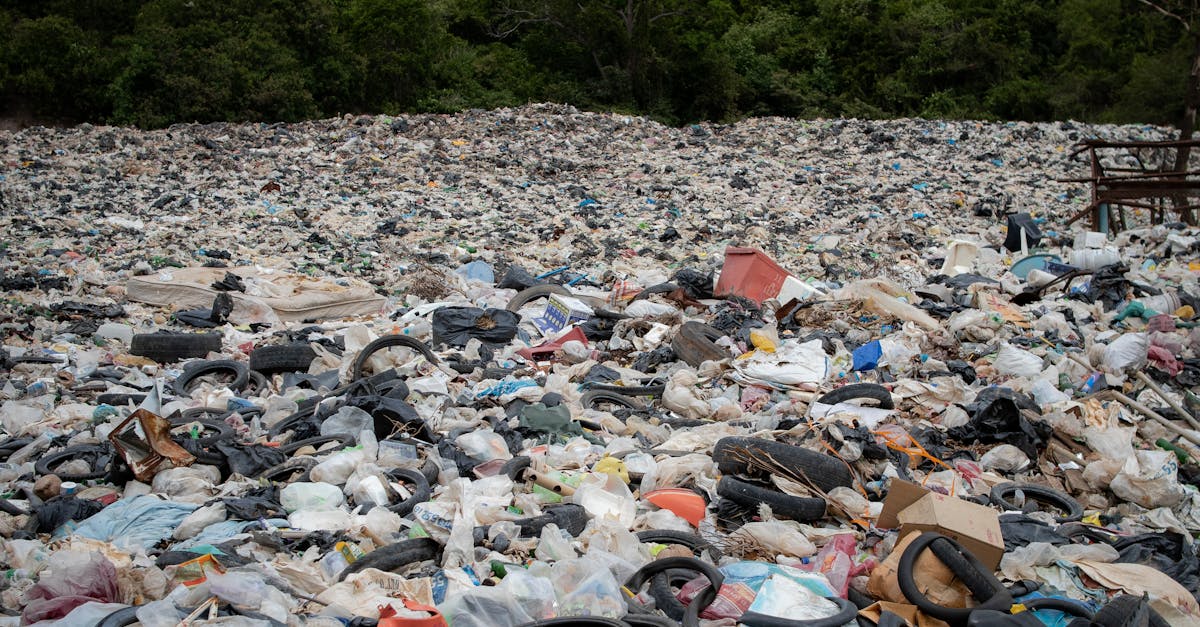
Global efforts to address plastics have delivered limited progress, while numerous challenges persist. Production keeps climbing, waste management remains underfunded, policies lean too much on voluntary measures from industry, and many touted technical solutions fail to confront the underlying drivers. Consequently, plastic pollution continues to intensify, fossil-fuel dependencies deepen, and social and environmental damages grow—most acutely in low- and middle-income countries.
Failure 1 — Production continues to rise while policy stays focused on end-of-life stages
The conversation remains tilted toward waste management and recycling while production of new plastics marches upward. Global production is on the order of hundreds of millions of tonnes per year and industry plans for new petrochemical capacity signal further increases. Policy attention that prioritizes recycling and cleanups over limits on virgin production means a constant oversupply of cheap virgin resin. The economic reality—virgin resin is substantially cheaper than most recycled alternatives—undercuts reuse and recycled-content mandates unless they are strongly regulated and subsidized.
Examples and implications:
- Recent petrochemical developments across the United States, the Middle East, and Asia have broadened feedstock capacity, effectively ensuring supply for many decades.
- In the absence of enforceable production limits or explicit phase-down commitments, recycling targets function as a short-lived reaction to an escalating challenge rather than a comprehensive remedy.
Failure 2 — Recycling is overpromised and underdelivers
Common claims that recycling will solve the plastics crisis ignore practical limits. Estimates suggest only a small fraction of all plastic ever produced has been genuinely recycled into equivalent-quality products. Mechanical recycling struggles with contamination, mixed polymers, multilayer packaging, and additives that prevent closed-loop reuse. Many recyclable claims on packaging are ambiguous or misleading, confusing consumers and policymakers.
Key technical and practical issues:
- Multilayer and composite packaging remains prevalent due to its strong barrier performance, yet most of these materials still cannot be recycled efficiently on a large scale.
- Contamination within household waste and limited sorting capabilities diminish both the quantity and the quality of materials that can be recovered.
- Downcycling frequently occurs, as the plastic obtained typically shows reduced material properties and fewer potential applications, which sustains the need for virgin resin.
Failure 3 — “Chemical recycling” and other technological fixes are being promoted as mere greenwashing
Chemical recycling, pyrolysis, and other advanced technologies are promoted as silver-bullet solutions, but most are not proven at scale, may be energy- and carbon-intensive, and sometimes classify waste treatment as recycling when it is in effect incineration or disposal. Investment in unproven technologies can divert public funds and policy attention away from reuse, redesign, and genuine circular systems.
Concerns and cases:
- Numerous chemical recycling plants operate as limited pilot projects, and their economic feasibility frequently hinges on inexpensive feedstock and policy-driven benefits that can obscure actual environmental impacts.
- Regulatory classifications that treat energy recovery or feedstock generation as ‘recycling’ can skew both national and corporate recycling metrics.
Failure 4 — Waste trade and export prohibitions ultimately displaced the issue rather than resolving it
China’s 2018 National Sword policy, which sharply restricted foreign plastic waste imports, revealed how heavily the world relied on sending its refuse to nations with lower processing expenses, and instead of triggering major upgrades to domestic waste-management systems in exporting countries, these shipments were redirected across Southeast Asia, where they often ended up in unlawful or informal disposal practices that caused environmental degradation and various social harms.
Illustrative outcomes:
- After import restrictions in China, imports of plastic waste surged to Malaysia, Vietnam, and Thailand, straining local systems and sparking crackdowns and repatriations.
- Basel Convention amendments tightened controls on hazardous plastic waste shipments, but enforcement is uneven and illicit trade continues.
Failure 5 — Fragmented governance persists while widespread industry influence shapes decisions
Global governance of plastics remains scattered across various arenas such as trade, environmental, and health forums, while national policies differ significantly. Numerous industry-driven programs promote voluntary goals and rely on public relations to showcase progress, yet they typically lack independent oversight, specific schedules, and real accountability. This loose regulatory mosaic fosters greenwashing and sidesteps essential systemic reforms.
Governance weaknesses:
- Voluntary corporate commitments often lack standardized metrics, independent audits, and penalties for non-compliance.
- Trade and investment rules can conflict with environmental goals, complicating import controls and product standards.
- Global treaty negotiations have made progress on a mandate for a global plastics agreement, but proposals differ sharply on whether to include production controls, binding targets, and rights for impacted communities.
Failure 6 — Financing, infrastructure, and capacity are inadequate in many regions
Low- and middle-income countries frequently struggle with inadequate systems for collecting, sorting, and safely disposing of waste, and international funding for municipal waste services remains scarce; even when resources are available, they are often directed toward waste-to-energy initiatives or temporary solutions rather than long-lasting circular-economy investments.
Practical impacts:
- Large urban populations generate plastic waste faster than infrastructure can handle, leading to open dumping, illegal burning, and riverine discharge that reaches marine environments.
- Informal waste workers play a crucial role in recovery but frequently lack legal recognition, safety protections, or fair compensation.
Failure 7 — Health and chemical risks receive minimal attention
Plastics often include a wide array of additives such as stabilizers, plasticizers, flame retardants, and colorants that may be harmful and can leach into goods, ecosystems, and people. Policies that concentrate solely on polymer categories overlook the dangers arising from intricate formulations and hazardous additives. Recycling materials that contain these substances can prolong exposure risks if these additives are not properly controlled or eliminated.
Examples:
- Recycled plastics intended for food-contact uses are subject to strict evaluations and limitations, and without these safeguards, impurities could migrate into supply networks.
- Long-standing additives, including certain flame retardants and plasticizers, often linger in waste streams and the broader environment for many years.
Failure 8 — Metrics and incentives are out of sync
Too often, success gets defined by flashy recycling statistics or high-profile corporate pledges rather than by real progress in total material flow, reductions in hazardous substances, or preventing leaks into natural ecosystems, while subsidies and fiscal policies routinely prioritize low-cost virgin polymer manufacturing instead of supporting reuse models or the production of recycled-content materials.
Policy misalignments:
- Recycling targets that lack quality and content requirements can incentivize low-value recovery rather than high-integrity circular solutions.
- Subsidies for fossil fuels and feedstocks lower the cost of virgin plastics, undermining demand for recycled alternatives.
Where evidence reflects some advancement yet still points to ongoing shortcomings
There are important policy and market developments—single-use plastics bans in several jurisdictions, extended producer responsibility programs in parts of Europe, amendments to the Basel Convention, and increased corporate reporting. However, the progress is uneven and often inadequate in scale and enforcement to counter rising production and consumption.
Notable examples:
- EU Single-Use Plastics Directive has led to declines in selected products within several member states, although varying enforcement and persistent loopholes continue to curb its overall effectiveness.
- Certain producer responsibility schemes have boosted collection levels, yet many still fall short by lacking robust recycled-content requirements and meaningful penalties that would drive true circular performance.
What must change to correct these failures
Corrective actions call for a shift in policy focus from end-of-life interventions to broad cuts in production and product redesign, supported by accountable governance and financing. Required adjustments span binding caps on production, uniform definitions and metrics, enforceable mandates for recycled content and the removal of harmful additives, robust EPR systems with clear reporting, regulated elimination of non-recyclable packaging, increased investment in collection networks and the formal integration of waste workers, and caution toward unproven technological approaches such as chemical recycling.
Priority interventions:
- Establish binding international and national rules that tackle production volumes rather than focusing solely on waste management.
- Harmonize labeling, metrics, and disclosure practices to curb greenwashing and support clear comparisons.
- Emphasize reuse, refill models, and product redesign to reduce material complexity and strengthen mechanical recycling feasibility.
- Eliminate the most hazardous additives and hard-to-recycle formats while channeling investment into safe, proven recycling processes where they are suitable.
- Shift subsidies and fiscal incentives away from virgin resin manufacturing and toward circular economy initiatives, particularly within low-income countries.
The current plastics response consists of scattered measures that often end up sustaining the very system behind the issue: abundant, low-priced virgin plastics and fragmented, underfunded waste management. Solving this demands aligning policy incentives with material boundaries, prioritizing the rights and needs of impacted communities and workers, and making decisive political choices about how products are made so that reuse and high-quality recycling can genuinely expand.