The emblematic Apartosuites Jardines de Sabatini hotel celebrates its 50th anniversary this October. Five decades have passed since it first opened its doors in the heart of the capital, a stone’s throw from the then North Station and at the foot of the Príncipe Pío mountain.
In that Madrid of the seventies, the concept of the establishment was so groundbreaking that it had to be baptized with a neologism coined ad hoc: apartosuites. The size and comfort of its rooms were geared to long stays and so, since its foundation in 1974, it set out to offer its guests much more than accommodation: a genuine Madrid experience combined with the comfort of an apartment and the services of a hotel.
The rooms, featuring fully furnished kitchens, create a comforting atmosphere reminiscent of home, a feature that quickly drew in notable guests, including the poet Rafael Alberti and the actress Nuria Espert, who frequented the venue for its serene ambiance, seclusion, and outstanding service.
Madrid, 1974
In October 1974, Madrid was a different world compared to what we see today. The Sabatini Gardens, which lend their name to the hotel, had been in the works since the 1930s, following the demolition of the Royal Palace stables. It wasn’t until 1978 that they were officially opened to the public. The grandfather of the present director, Bernardo García, who owned one of the earliest SEAT dealerships in Madrid, was responsible for constructing the ApartoSuites Jardines de Sabatini right across from them, thereby broadening his business horizons.
Like him, numerous Spaniards chose to embark on ventures that were anticipated to thrive at that moment. The dictatorship of General Franco was evidently approaching its conclusion, and the nation increasingly identified with a blossoming Europe. Nearby, the area that had once hosted the Cuartel de la Montaña was now home to the Temple of Debod, meticulously transported stone by stone from Aswan. The skyline of Madrid was beginning to inspire dreams of a contemporary city within a modern world.
No evidence remained of the washerwomen who once made their way down the Cuesta de San Vicente toward the river, nor of their refuge, which was torn down in the 1930s. Additionally, the first public swimming pool in Madrid, “Los baños del Niágara,” was also gone, as it made way for Bernardo García’s concessionaire. Today, that location is occupied by a parking lot adjacent to the hotel.
In this evolving society, ApartoSuites Jardines de Sabatini emerged and has adapted alongside it up to the present day.
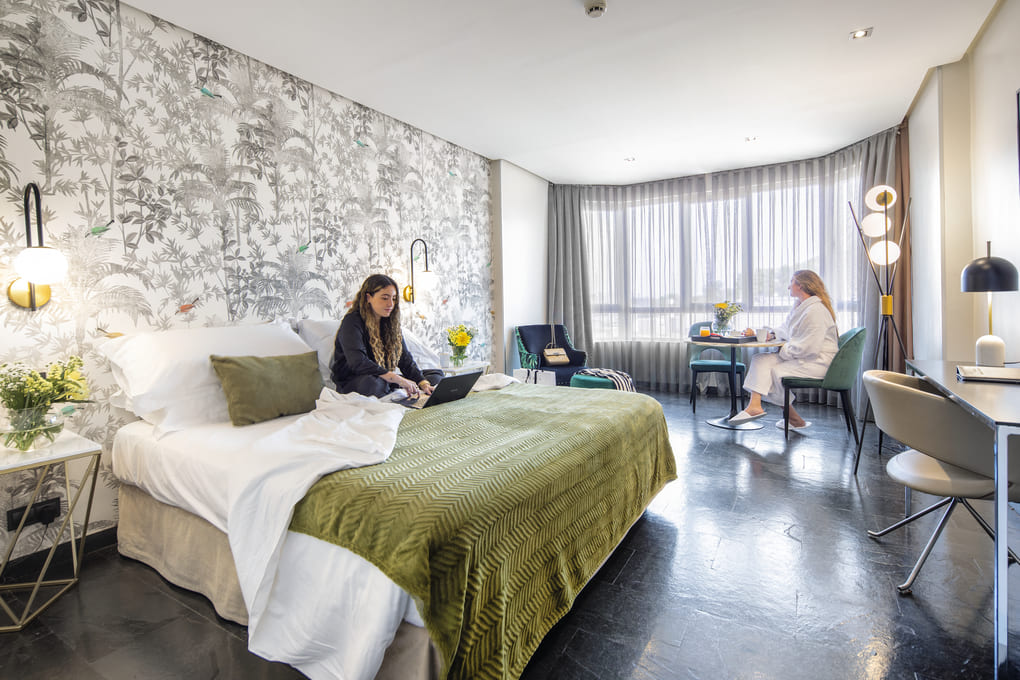
The Hotel Today
The anniversary of ApartoSuites Jardines de Sabatini serves as a chance to explore the current state of the building, showcasing all the renovations made to the facilities, particularly over the past five years, while still preserving the idea of spacious rooms outfitted with kitchenettes, resembling apartments, yet complemented by the services of a hotel.
One of the standout initiatives in recent years has been the High Altitude Brunch, available every Saturday and Sunday from autumn through spring on its delightful terrace, celebrated for offering breathtaking views of the Royal Palace. Guests can reach it directly from the street via a glass elevator, which provides a glimpse of an eight-story mural crafted by Brazilian artist Rogerio Fernandes.
Upon entering ApartoSuites Jardines de Sabatini, one is enveloped in an atmosphere of art. Alongside Fernandes’ artwork, the installations created by the urban art collective Boa Mistura can be found in various locations throughout the building, including the expansive graffiti piece “Del Corazón al Cielo” (From the Heart to the Sky), which spans 62 square meters. The contributions of painter Cristina Gamón in the hotel lobby and breakfast area, along with Oscar Vautherin’s sculptures flanking the entrance and the piece titled “Five Left Feet” at the reception, round out the impressive roster of artists featured here.
A hotel with an automobile museum that takes you back to early 20th century Madrid
One of the major highlights of Apartosuites Jardines de Sabatini is its unique classic car museum, situated in the basement of the building. This museum was created in honor of José Luis García, following a request from his daughters, Charo and Monica García Silgo.
This captivating collection boasts genuine automotive treasures, including a 1915 Ford T, a stylish Hispano-Suiza, and a unique section named España Cañí, where classic vehicles like biscuters, motorcycles, and the renowned Vespa featured in the film “Amanece, que no es poco” are showcased.
Hotel guests enjoy complimentary access to this venue, which has become an essential stop for enthusiasts of automobiles and Madrid’s cultural heritage. The expansive images adorning the walls, sourced from the ABC newspaper archive, whisk visitors back to an era when these vehicles were integral to the city’s landscape.
Commemorative events with privileged views
During the entire month of October, the hotel will commemorate its 50th anniversary with special events held on its stunning terrace, offering the finest views of Madrid’s Royal Palace. Planned activities for November will also feature guided tours of the classic car museum and a charitable flea market.
“This 50th anniversary is a particularly significant milestone for us, and we aim to celebrate it with everyone who has contributed to our journey, as well as those visiting for the first time,” remarks Charo García Silgo. “We have observed the city transform over the years, and we take pride in being a venue where tradition intertwines with modernity, where, despite embracing the latest technologies, our greatest strength remains our dedicated team.”
This 50th anniversary offers a remarkable chance to explore a location where history resonates in every nook and the warmth of hospitality is felt from the very first visit. Fifty years of distinction, comfort, and unmatched views of Madrid await you.