Our website use cookies to improve and personalize your experience and to display advertisements(if any). Our website may also include cookies from third parties like Google Adsense, Google Analytics, Youtube. By using the website, you consent to the use of cookies. We have updated our Privacy Policy. Please click on the button to check our Privacy Policy.
Avatar photo

Julián Aranda

62 Posts
How does asset tokenization change custody, settlement, and liquidity?

Decoding Asset Tokenization’s Effect on Custody, Settlement, Liquidity

Asset tokenization is the process of representing real-world or financial assets as digital tokens on a distributed ledger. These tokens can represent ownership rights, cash flows, or access rights to assets such as equities, bonds, real estate, commodities, private credit, or funds. By converting traditional assets into programmable digital units, tokenization reshapes how assets are held, transferred, and traded across financial markets.The biggest transformations emerge within three essential market functions: custody, settlement, and liquidity. Traditionally, each of these areas has depended on intermediaries, manual reconciliation, and restricted operating schedules. Through tokenization, a new operating model takes shape, one that runs…
Read More
Nissan Hopes that its Queerty DRIVEN Campaign will Yield LGBTQ+ Customer Affinity via Allyship

Queerty DRIVEN: Nissan’s Campaign for LGBTQ+ Customer Affinity and Allyship

A digital campaign blending storytelling, representation, and branded content has gained industry recognition. By focusing on authentic voices within the LGBTQ+ community, the initiative highlights how marketing can align with identity and social impact.A recent nomination for a Shorty Impact Award has renewed focus on a joint campaign designed to link a global automotive brand with LGBTQ+ audiences through narrative-driven content and digital interaction, and the effort, created through a collaboration between Nissan and Queerty, signals a wider evolution in affinity marketing as companies shift from conventional promotional tactics to stories that speak to identity, lived experience, and shared community…
Read More
Grupo Ficohsa: Financial Strength Recognized by the U.S. International Development Finance Corporation

Grupo Ficohsa Consolidates Financial Strength with U.S. Financing

Grupo Ficohsa’s financial solidity and dependability have been underscored by its close alliance with the U.S. International Development Finance Corporation (DFC), an entity that backs initiatives with significant economic and social impact. This collaboration shows the confidence that the United States places in the financial institution, given that the DFC offers financing solely to banks that uphold rigorous standards of transparency, governance, and stability.Credentials that reinforce confidenceAccess to DFC resources entails not only a careful evaluation of an institution’s financial strength but also an extensive examination of its governance frameworks, regulatory adherence, and risk management procedures. Fulfilling these requirements shows…
Read More
How is EUV lithography evolving to enable smaller process nodes?

The Evolution of EUV Lithography: Driving Smaller Process Nodes

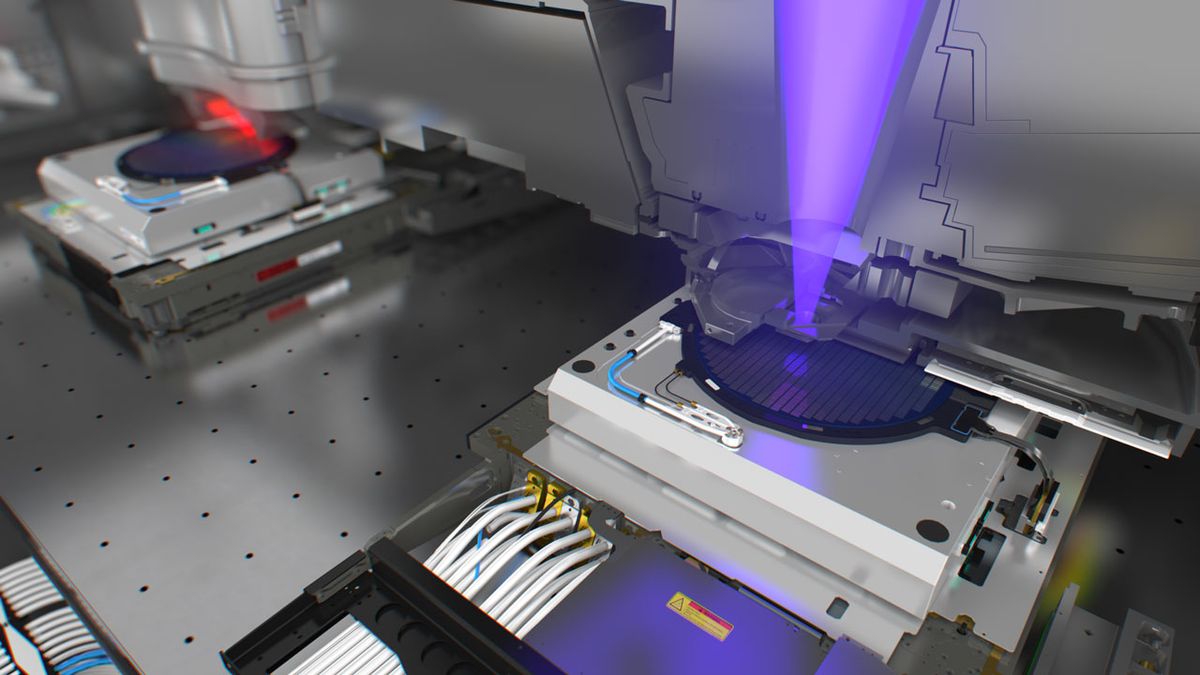
Extreme Ultraviolet lithography, widely referred to as EUV lithography, stands as the pivotal manufacturing method driving the advancement of semiconductor process nodes below 7 nanometers. Harnessing 13.5 nanometer wavelength light, this approach enables chip manufacturers to create exceptionally compact and intricate circuit designs that earlier deep ultraviolet methods could not deliver economically or physically. As the semiconductor sector advances toward 3 nanometers, 2 nanometers, and even smaller scales, EUV lithography continues to evolve at a rapid pace to address extraordinary technical and financial challenges.From Early EUV Systems to Large-Scale Production ReadinessEarly EUV systems were primarily research tools, constrained by low…
Read More
How are microLED displays advancing for wearables and AR devices?

MicroLEDs for Wearables & AR: Progress & Future

microLED is a display technology built from microscopic light-emitting diodes where each pixel emits its own light. Unlike LCD, there is no backlight, and unlike OLED, there are no organic materials that degrade quickly. For wearables and augmented reality devices, this combination of self-emissive pixels, high brightness, and long operational life addresses long-standing limitations in size, power efficiency, and durability.Wearables and AR systems demand displays that are extremely small, readable in sunlight, energy-efficient, and capable of high pixel density. microLED development is increasingly aligned with these requirements, making it one of the most strategically important display technologies for next-generation personal…
Read More
Why are merger and acquisition strategies evolving in tech and healthcare?

Future of M&A: Shifting Strategies in Tech & Healthcare

Merger and acquisition activity across technology and healthcare is increasingly being reshaped by fast‑moving innovation, evolving regulatory demands, volatile capital markets, and shifting customer expectations, leading traditional scale‑oriented deals to be replaced by more precise, capability‑driven transactions aimed at mitigating risk, speeding market entry, and securing scarce assets including data, talent, and platforms, a shift that underscores how both sectors now operate in settings where swift execution, regulatory alignment, and seamless integration are just as critical as overall scale.Structural changes driving new M&A logicSeveral macro forces are altering how companies think about acquisitions:Technological convergence: Cloud computing, artificial intelligence, data analytics,…
Read More
How is solid-state battery progress changing EV timelines and strategies?

Decoding EV Futures: Solid-State Battery’s Role in Timelines & Strategies

Solid-state batteries replace the liquid or gel electrolyte used in conventional lithium-ion batteries with a solid electrolyte. This structural change promises higher energy density, improved safety, longer life cycles, and faster charging. For electric vehicles, these benefits directly translate into longer driving range, reduced fire risk, and potentially lower lifetime costs.Automakers and battery manufacturers have pursued solid-state technology for more than a decade, but recent progress in materials science, manufacturing methods, and scale-up has moved it from laboratory promise toward industrial reality. As this shift accelerates, it is reshaping electric vehicle development timelines and forcing strategic reassessments across the industry.Key…
Read More
Ocean Reef: the preferred latin american destination for international investors

International Investors Flock to Ocean Reef: Latin America’s Destination

In today’s global market, international investors increasingly look for destinations that provide stability, legal clarity, and long-term value growth. Across Latin America, the real estate sector has risen in prominence, with several nations distinguishing themselves through solid economic performance and strong appeal for foreign capital. In Panama’s case, for instance, upscale residential projects like Ocean Reef Islands have started to position themselves as notable references within the premium market segment.Panama has strengthened its standing as a dependable destination for investment, and developments such as Ocean Reef Islands highlight this trend toward more exclusive, meticulously designed projects. Curious to learn why…
Read More
Chad: CSR cases improving access to energy and essential community services

Chad: CSR Case Studies on Energy & Community Service Improvement

Chad contends with formidable development obstacles driven by its geography, sparse population, and many years of limited investment, and although the country has roughly 16–18 million inhabitants, its GDP per capita remains among the world’s lowest, leaving essential services and dependable energy access scarce; nationwide electricity availability sits near 10%, while rural areas reach only a few percent, and within this setting, corporate social responsibility (CSR) initiatives together with donor and NGO programs have become key supplements to government efforts, targeting renewable power, electrification for social institutions, clean cooking solutions, water provision, and broader community development.Why CSR matters for energy…
Read More
Why are venture capital strategies shifting toward capital efficiency?

The Rise of Capital Efficiency in Venture Capital

Venture capital has entered a period of recalibration. After a decade marked by abundant liquidity, rapid scaling, and tolerance for prolonged losses, investors are increasingly prioritizing capital efficiency—the ability of startups to generate meaningful outcomes with less capital. This shift reflects macroeconomic pressures, structural changes in technology, and hard-earned lessons from recent market cycles.The Macroeconomic Backdrop Reshaping Venture CapitalFor much of the 2010s, prolonged low interest rates and widespread quantitative easing steered capital toward riskier assets, prompting venture funds to swell, valuations to climb, and a growth-at-all-costs mindset to take hold. That landscape has now shifted.Rising interest rates have increased…
Read More