Our website use cookies to improve and personalize your experience and to display advertisements(if any). Our website may also include cookies from third parties like Google Adsense, Google Analytics, Youtube. By using the website, you consent to the use of cookies. We have updated our Privacy Policy. Please click on the button to check our Privacy Policy.

Science and Technology

tulips in garden in hangzhou china

The Enduring Influence of Carl Linnaeus on Biology

Carl Linnaeus, often revered as the "father of modern taxonomy," stands as a figure synonymous with the revolutionary reshaping of biological sciences. His lifelong dedication to classification and nomenclature not only redefined how life was organized but also laid the essential foundation for systematic biology, influencing botanical, zoological, and ecological studies for centuries.The Genesis of Contemporary TaxonomyBefore Linnaeus, the categorization of life forms was based on intricate descriptions and variable terminology, frequently causing ambiguity and misunderstanding among academics. The common method for describing a plant or animal involved extensive Latin expressions outlining its features—a system referred to as the "polynomial"…

Read More
What did James Clerk Maxwell contribute to electromagnetism?

Maxwell’s Electromagnetism: Key Contributions Explained

James Clerk Maxwell is recognized as a pivotal figure in physics, largely due to his groundbreaking efforts in electromagnetism. The influence of his theoretical and empirical discoveries has spread throughout contemporary science and technology, driving progress from radio communication to the intricacies of quantum field theory. A detailed review of his primary achievements offers deep insight into how Maxwell redefined the scientific understanding of electricity and magnetism.The Core Principles: Bringing Together {{Electricity}} and {{Magnetism}}Prior to Maxwell, electricity and magnetism were largely investigated as distinct phenomena, each with their own sets of laws. Pioneers such as Michael Faraday, André-Marie Ampère, and…
Read More
150 years ago, the periodic table began with one chemist's vision ...

The major discovery by Dmitri Mendeleev

Dmitri Ivanovich Mendeleev, a Russian chemist born in 1834, is best known for his groundbreaking work that redefined the foundations of chemistry. His discovery was not of a single element or compound but of a systematized order that would change the scientific approach to chemical elements forever. Mendeleev’s magnum opus was the formulation of the Periodic Law and the creation of the Periodic Table, an organized structure of the known elements by their atomic masses and properties. This evolutionary scientific tool not only displayed what humanity knew about chemistry in the 19th century but also predicted the existence and characteristics…
Read More
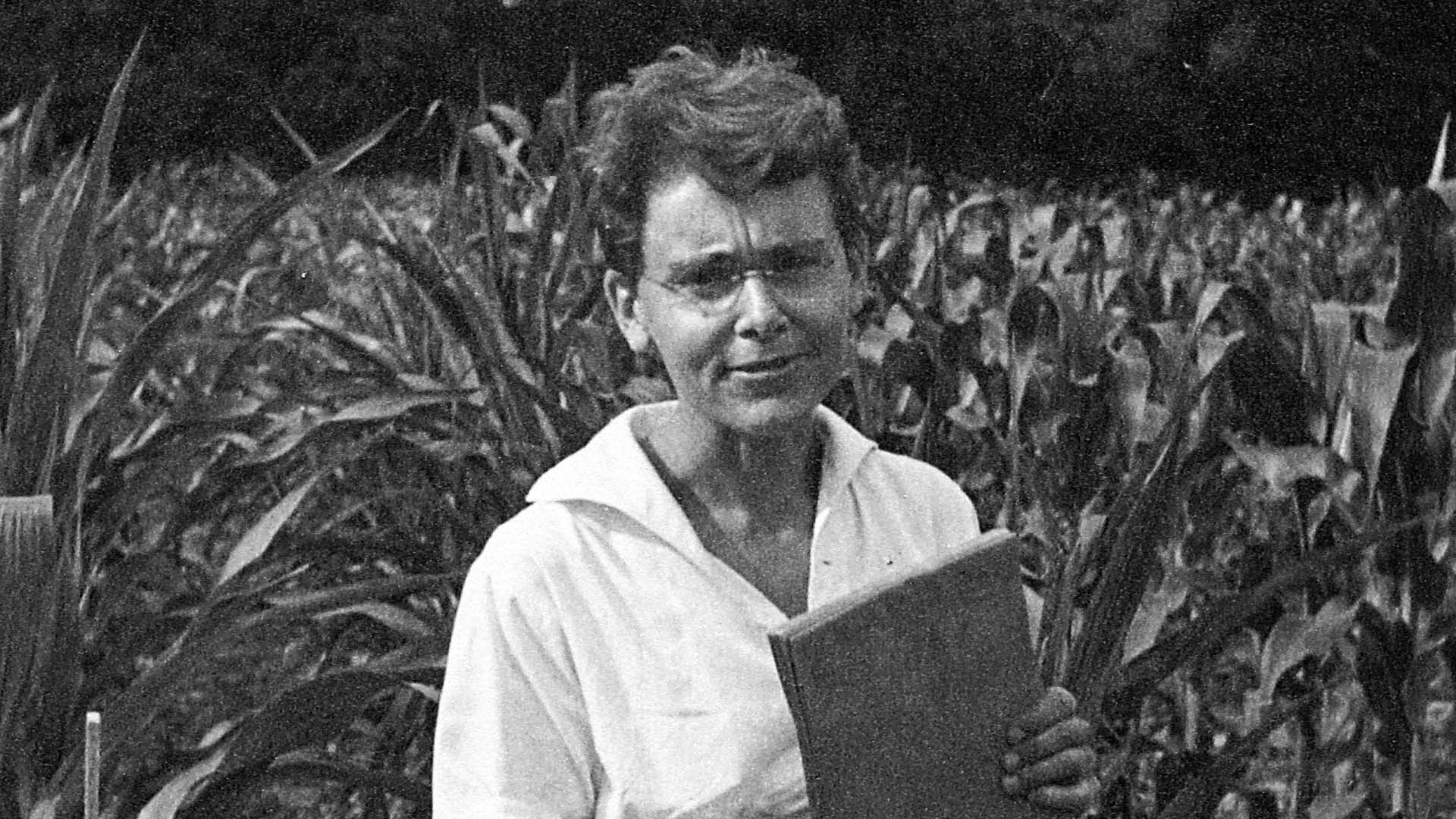
https://www.cshl.edu/wp-content/uploads/2019/12/McClintock-in-cornfield.jpg

What are Barbara McClintock’s most important genetics discoveries?

Barbara McClintock was a scientist from the United States whose groundbreaking contributions transformed the study of genetics. Her investigations not only uncovered essential genetic processes but also deepened the comprehension of genome behavior. McClintock's accomplishments are particularly remarkable considering the period during which she conducted her work, when genetics was still a developing field and opportunities for women in science were restricted.Genetics before McClintockBefore McClintock's research, most scientists thought that genes remained in constant locations on chromosomes. The idea of genomic constancy had not been significantly challenged. The works of Gregor Mendel, Thomas Hunt Morgan, and Charles Darwin established the…
Read More
How Galileo Changed Your Life

What did Galileo Galilei discover and why was he persecuted?

Galileo Galilei, a pivotal figure in the Scientific Revolution, is often hailed as the "father of modern science." Living from 1564 to 1642, Galileo's work transformed our understanding of the natural world, the cosmos, and the practice of scientific inquiry. His contributions spanned physics, astronomy, mathematics, and engineering, yet these advancements also led to intense conflicts with established authorities, culminating in his persecution by the Roman Catholic Church. To understand both his discoveries and the reasons behind his tribulations, it is essential to delve into the context, significance, and challenging implications of his work.Breakthrough Findings in Astronomy and PhysicsGalileo's most…
Read More
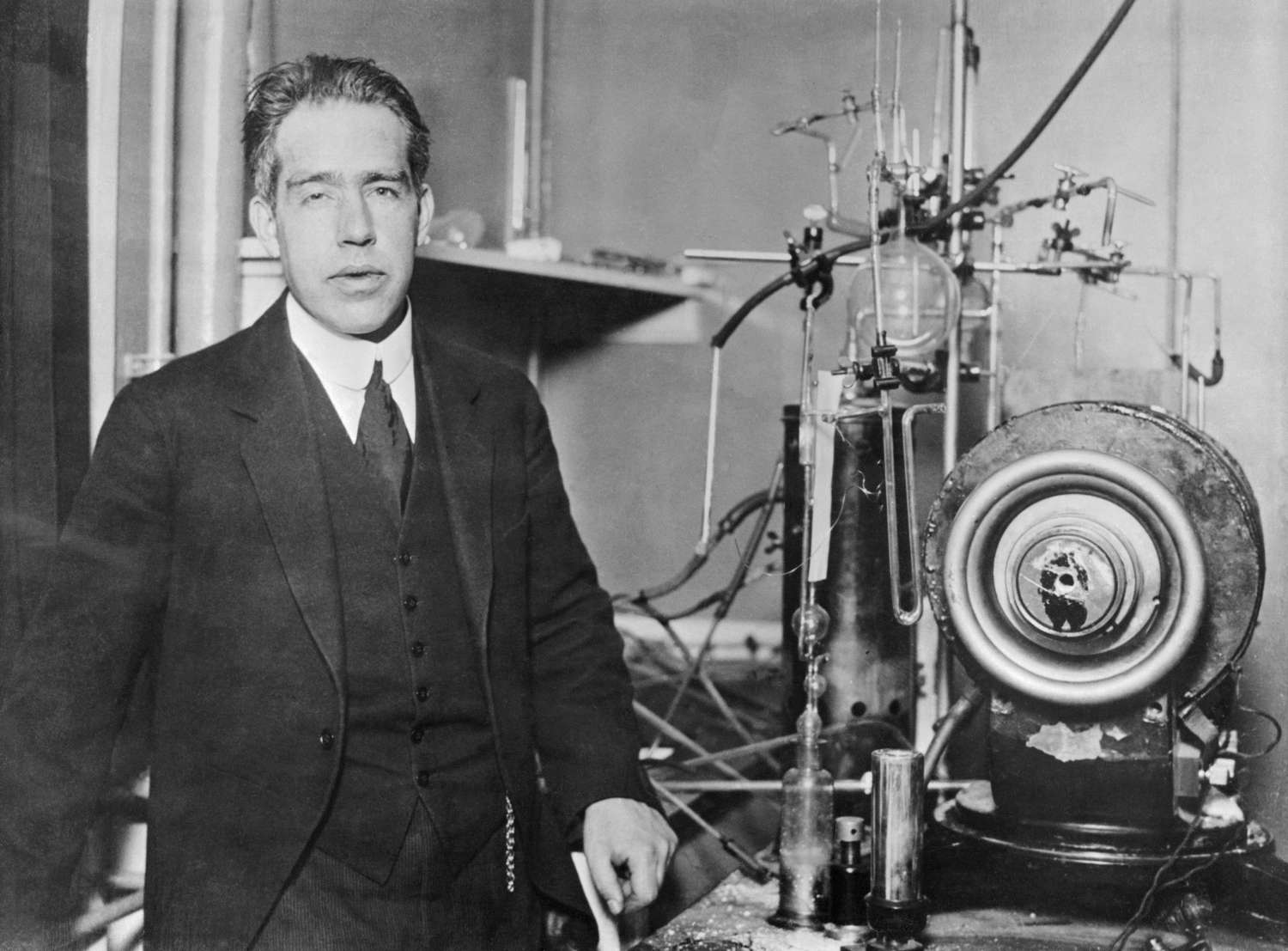
https://www.gob.mx/cms/uploads/image/file/836465/Niels-Bohr3.jpg

Niels Bohr and his revolutionary discoveries in quantum physics

Niels Bohr stands as one of the most influential figures in the history of quantum physics. His discoveries illuminated the mysterious nature of atomic structure and laid the foundation for the development of modern physics. To understand what Bohr truly discovered, it is necessary to consider the scientific context of the early twentieth century—an era when the limitations of classical physics became increasingly apparent, especially at the atomic and subatomic levels.The Atomic Model Before BohrBefore Bohr’s groundbreaking work, the prevailing atomic model was that proposed by Ernest Rutherford in 1911. Rutherford’s model described a dense, positively charged nucleus with electrons…
Read More
A skull unearthed in China challenges the timeline of human evolution, scientists say

Ancient skull in China questions established human evolution dates, scientists report

A significant fossil discovered in China is compelling researchers to reevaluate longstanding beliefs regarding the timeline of human evolution.A recent archaeological discovery in China has captured the attention of the global scientific community. Researchers have uncovered a remarkably well-preserved human skull that exhibits a combination of primitive and modern features, challenging previous theories about when and how humans evolved. The find provides a rare glimpse into the complex web of hominin species that existed tens of thousands of years ago, suggesting that human evolution may have been far more intricate than previously understood.The discovery and its significanceThe skull was excavated…
Read More
What did Emmy Noether contribute to mathematics?

What are Emmy Noether’s most important mathematical contributions?

Mathematics is replete with groundbreaking figures, but only a select few have reshaped its very foundations. Emmy Noether, a German mathematician born in 1882, belongs to this rare class. Throughout the first half of the twentieth century, her work revolutionized fields as varied as algebra, theoretical physics, and the philosophy of mathematics itself. To understand the scope and depth of Noether’s contributions, one must explore the transformative ideas she introduced and the lasting impact of her theorems and methodologies.Noether’s Theorem: The Connection between Symmetry and ConservationAmong the significant milestones of Emmy Noether is the formulation of Noether's Theorem, conceived in…
Read More
Jordi Segura

Jordi Segura, Head of AI at Masterchef World: a bridge between innovation and learning

Jordi Segura, a distinguished telecommunications engineer who holds a master's degree in Artificial Intelligence from MIT, has become a leading expert in the area of AI within the Spanish-speaking community. He is presently combining his responsibilities as Head of AI at Masterchef World with leading CenteIA Education, the most advanced online educational institution in the field.Due to his initiatives, Segura has successfully educated over 400,000 professionals and entrepreneurs globally via live events, playing a crucial role in digital transformation and becoming an important influence in making AI knowledge accessible to all.An innovative approach to educationCenteIA Education was established with the…
Read More
Jordi Segura

Jordi Segura, Head of AI at Masterchef World: he founded CenteIA Education and has trained more than 400,000 people in AI.

A telecommunications engineer holding a master's in Artificial Intelligence from MIT, Jordi Segura has become a leading figure in the Spanish tech landscape. His role as Head of AI at Masterchef World has enabled him to integrate AI into significant practical projects, establishing his status as an elite consultant and educator.With over 400,000 individuals instructed at in-person events globally, Segura has showcased his skill in introducing AI to a varied audience, ranging from novices to executives aiming for digital transformation.CenteIA Education: the concept evolves into an institutionWith the establishment of CenteIA Education, Segura solidifies his vision that Artificial Intelligence ought…
Read More